This second installment of three in the “Prelude to a Revolution” series examines how the American Revolution and Industrial Revolution emerged in North America alongside the persistent scarcity of a humble product: grass. Read the first post in the series here. This digital publication was supported by the Leventhal Map & Education Center's Small Grants for Early Career Digital Publications program.
In the early 1740s, Connecticut colonist Jared Eliot embarked upon an experiment: in the low-lying, peaty meadows near his Guilford, Connecticut farm, Eliot planted row after row of red clover seed.
The Connecticut agriculturalist also tried planting other seeds, including fowl meadow grass, English spear grass, and Timothy hay. But, as he later reported, “Of all the sorts of Grass Seed…none seemed to take hold and come up so well as red Clover.”
“This,” Eliot proclaimed, “I found to be the boldest and most hardy Grass.”
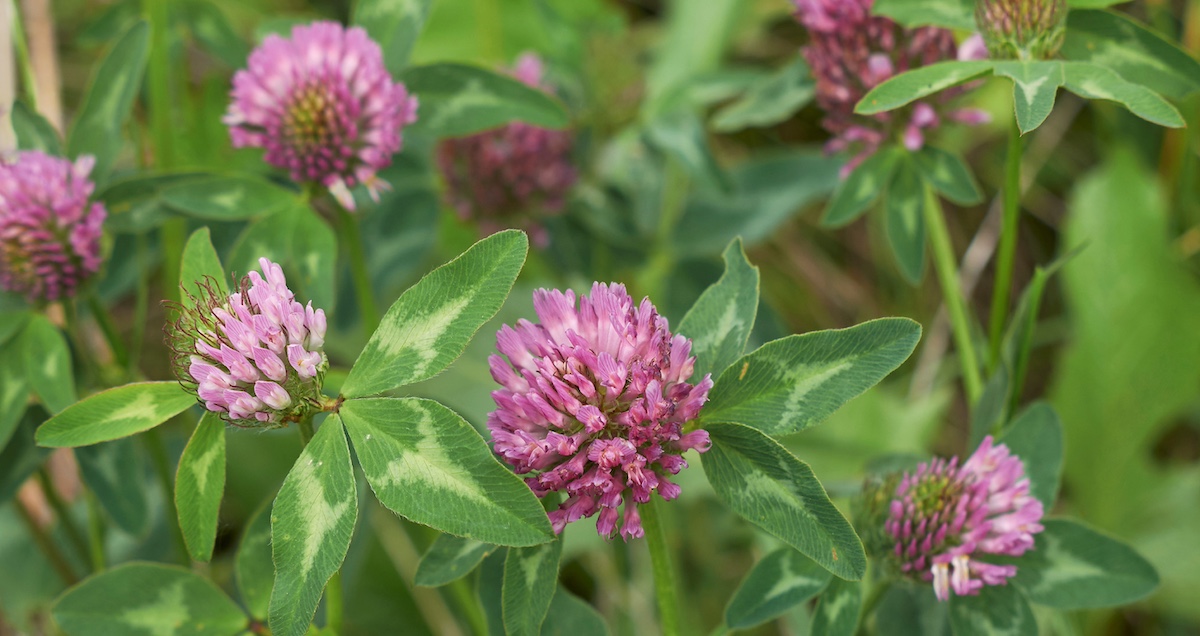
Red clover. Perhaps you’ve seen it growing boldly and hardily somewhere near you, too: flowering from May into the summer next to a park bench, or on a playing field or lawn. For Eliot, the emergence of the plant from his farm’s swampy mire was both a revelation and reward. Its vigorous growth signaled that his agricultural experiment had worked.
“The necessary stock of the country hath out-grown the meadows…”
Jared Eliot (1685–1763) did not live to see the onset of the American Revolution, but as a minister and physician who traveled often, he was a keen observer of the economy and environment of his time. In the final two decades of his life, from 1748 to 1759, Eliot published a series of essays that drew attention to an emerging condition that would later contribute to revolutionary unrest in the American colonies: by the 1740s, settlers living in colonial New England and the Mid-Atlantic had begun to run out of hay. These colonized landscapes’ cattle, oxen, horse, and settler populations had, quite simply, begun to outpace the available forage supply. The circumstance was particularly acute in densely-settled coastal areas, where available grass-producing coastal and upland areas were already fully taken up and subdivided between farmers.
The Connecticut agriculturist summarized the situation in a 1749 essay, issuing a stinging appraisal that no livestock-keeping farmer would have then wanted to hear: “It is evident that the necessary stock of the Country hath out-grown the meadows, so that there is not hay for such a stock as the present increased number of people really need: such an high price of hay, takes off much from the profit of raising & keeping stocks.”
It was these circumstances—shortages in available meadows and hay supply, and the dwindling profitability of keeping cattle and other “stock” in New England and the Mid-Atlantic—that prompted Eliot to try his hand at planting red clover. With its “quick growth” and capacity to thrive on drained lands, Eliot believed that the plant—if seeded widely—could “supply [colonists’] wants for the present” and prevent colonists from having to move westward, where they invariably produced conflict on the frontier.
“There are few People yet know the Value of this beneficial Grass,” Eliot wrote dolefully in 1748. With his agricultural experiments and essays—which became the first set of agricultural essays ever published in America—the Connecticut agriculturalist set out to change that.1
A storied coastal corridor
Today, commuters shuttle past Eliot’s farm daily as they travel Amtrak’s Northeast corridor tracks between Boston and Washington. As the train passes by the coastal town of Guilford, the farm’s coastal meadows flit by, void of Eliot’s former agricultural experiments.

The farm sits within a landscape vastly transformed since Eliot’s time. Back then, no train tracks cut through the site, and sea levels were substantially lower—scientists estimate at least two feet lower than at present.2 The farm itself sat near the post road running between Boston and New Haven. The Northeast corridor’s final destination, the United States’ capital—Washington, D.C.—did not yet exist.
That trains now rush past Eliot’s former farm delivering commuters to destinations stretching from Boston to Washington in the auspices of the United States, and not some other territory, is the result of two momentous events: the Industrial Revolution, and the American Revolution. The Industrial Revolution brought the rumbling trains; the American Revolution, the founding of the United States and its capital. These two revolutions emerged concurrently, as partial responses to an uncomfortable condition that began to pervade the most populous colonial societies of New England and the Mid-Atlantic by the 1740s: scarcity in land, timber, and grass.
Meadow landscapes of early America
In the digital elements below, you’ll learn more about the types of plants that were endemic to the meadow landscapes of New England and the Mid-Atlantic upon settlers’ arrival in early America, before Eliot and other American farmers began to more widely take up the planting of “artificial” and “improved” grasses and legumes, like red clover in the mid-eighteenth century.
Click the icon on the upper right to bring the story in a full-screen format.
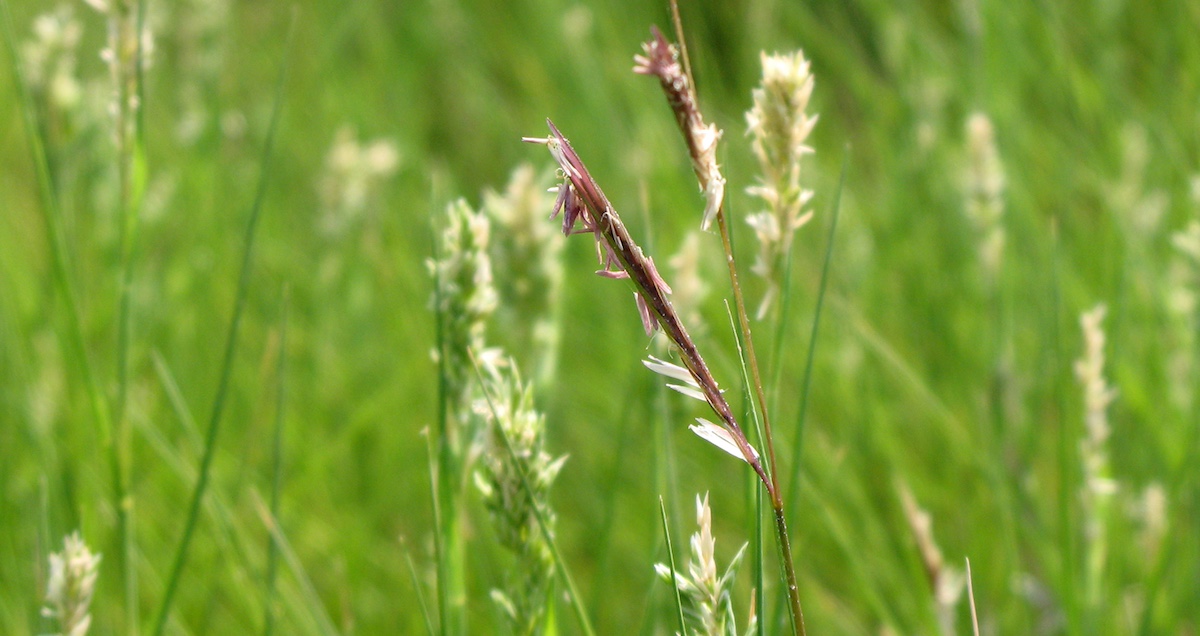
Salt marsh hay (Spartina patens) / Flickr user Sandra Richards, CC BY-NC-SA 2.0 license.
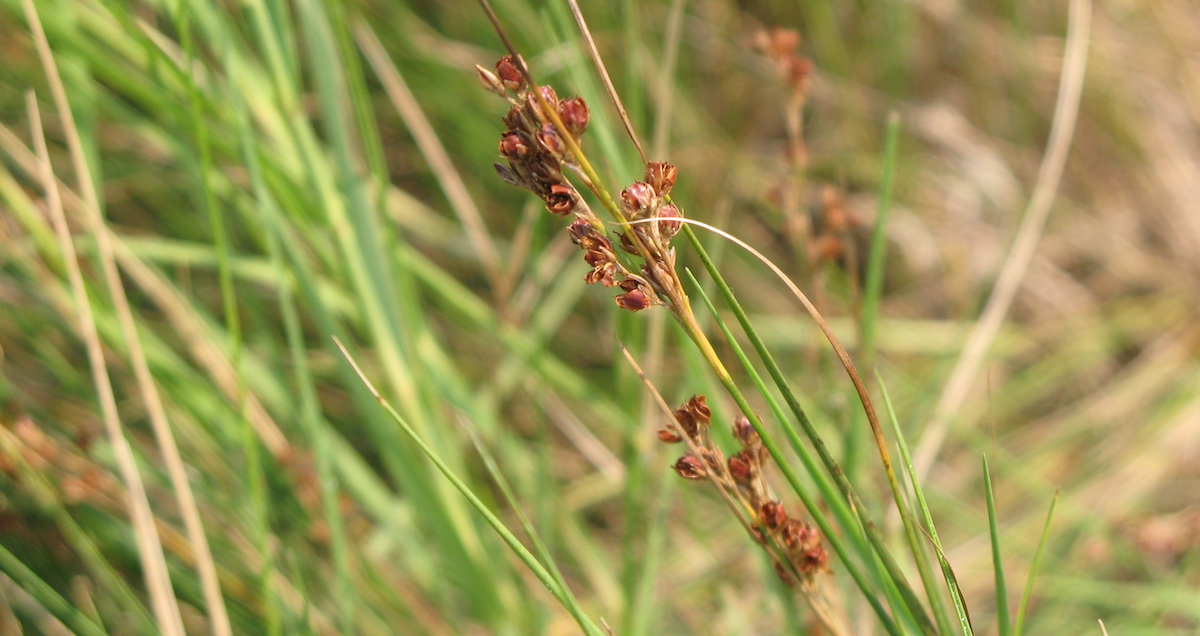
Black grass (Juncus gerardii) / Flickr user Sandra Richards, CC BY-NC-SA 2.0 license.
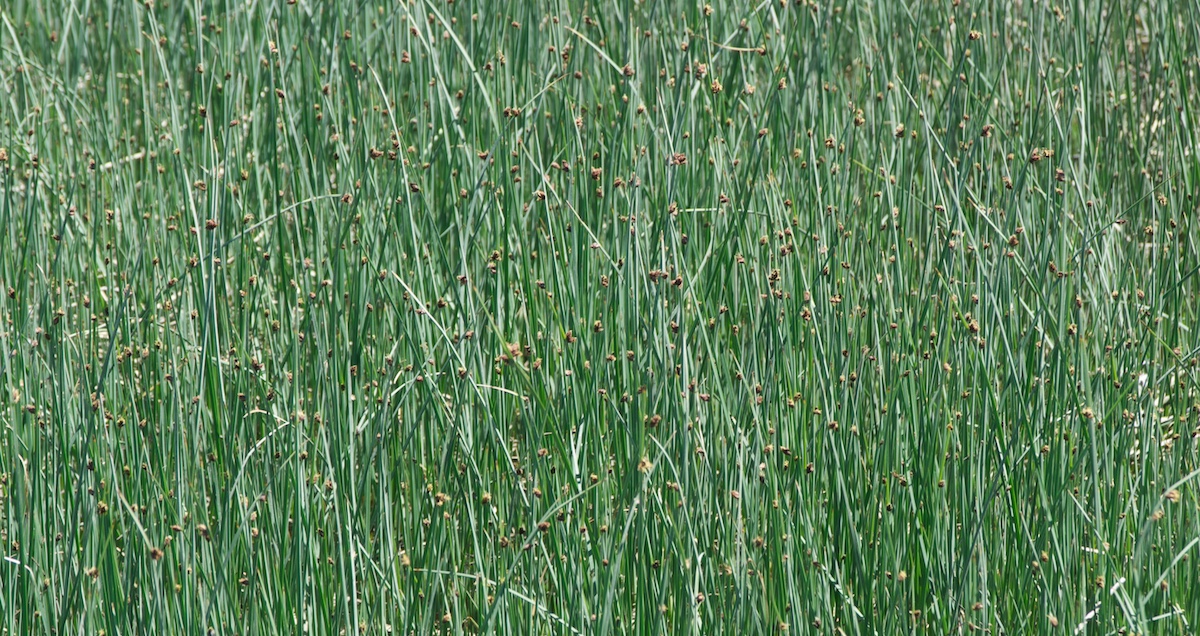
Three square rush (Schoenplectus americanus) / Jon Sullivan, iNaturalist, CC BY-NC 2.0 license.
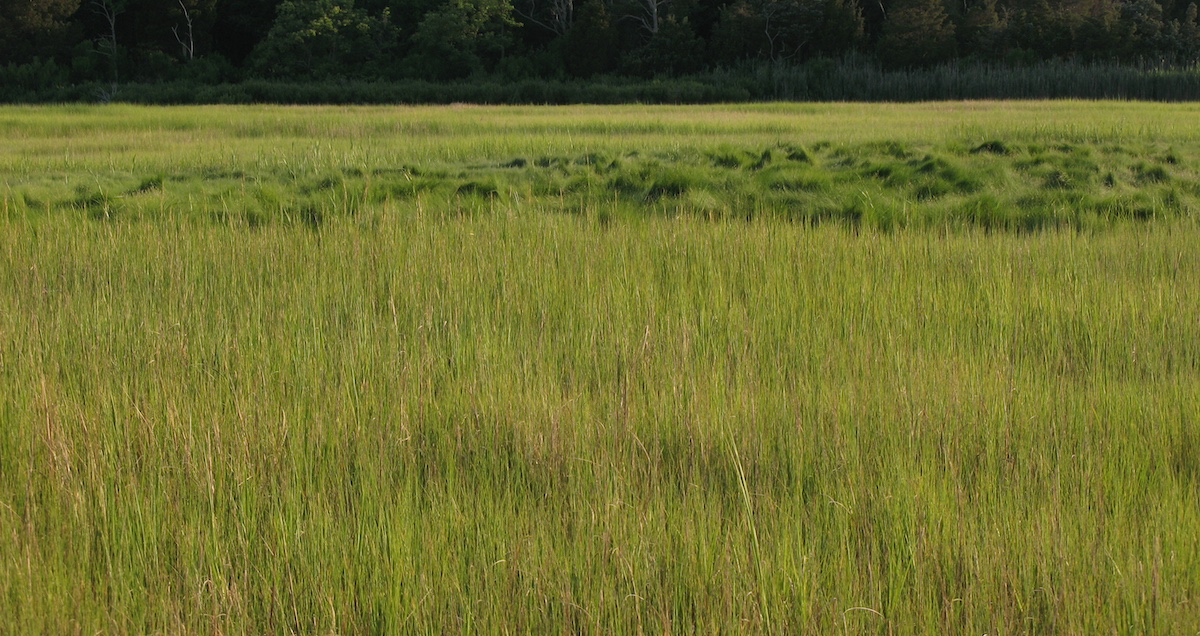
High and low spartina marsh. Spartina patens is the shorter, tufted grass and Spartina alterniflora is the taller grass. / Flickr user Sandra Richards, CC BY-NC-SA 2.0 license.
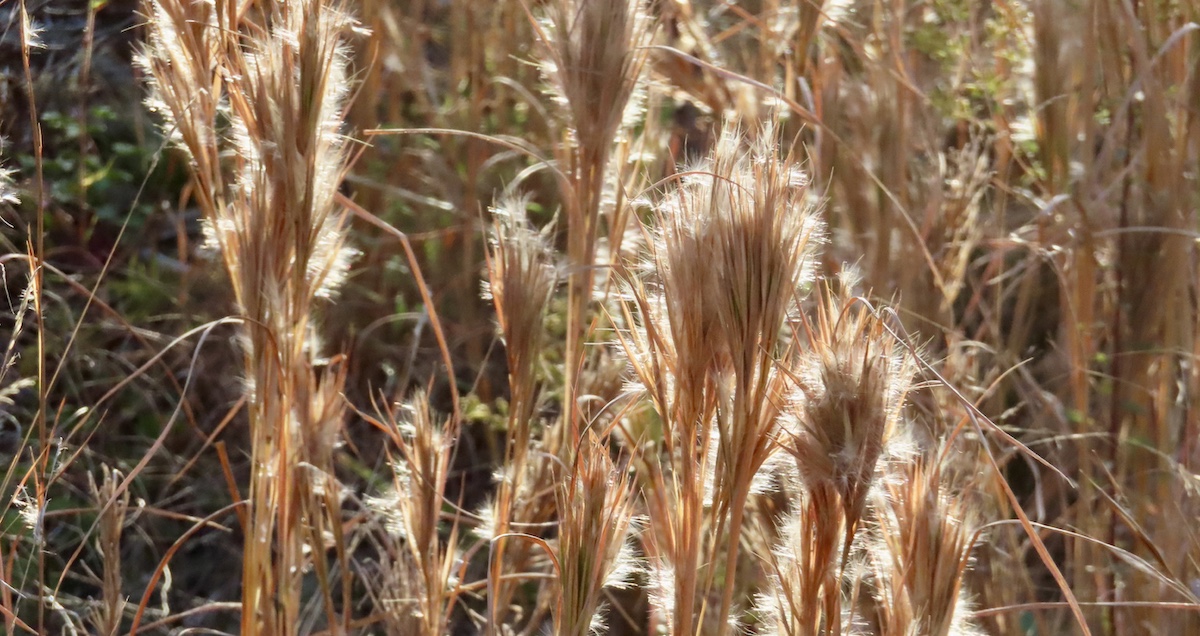
Bushy bluestem (Anatherum glomeratum) / iNaturalist
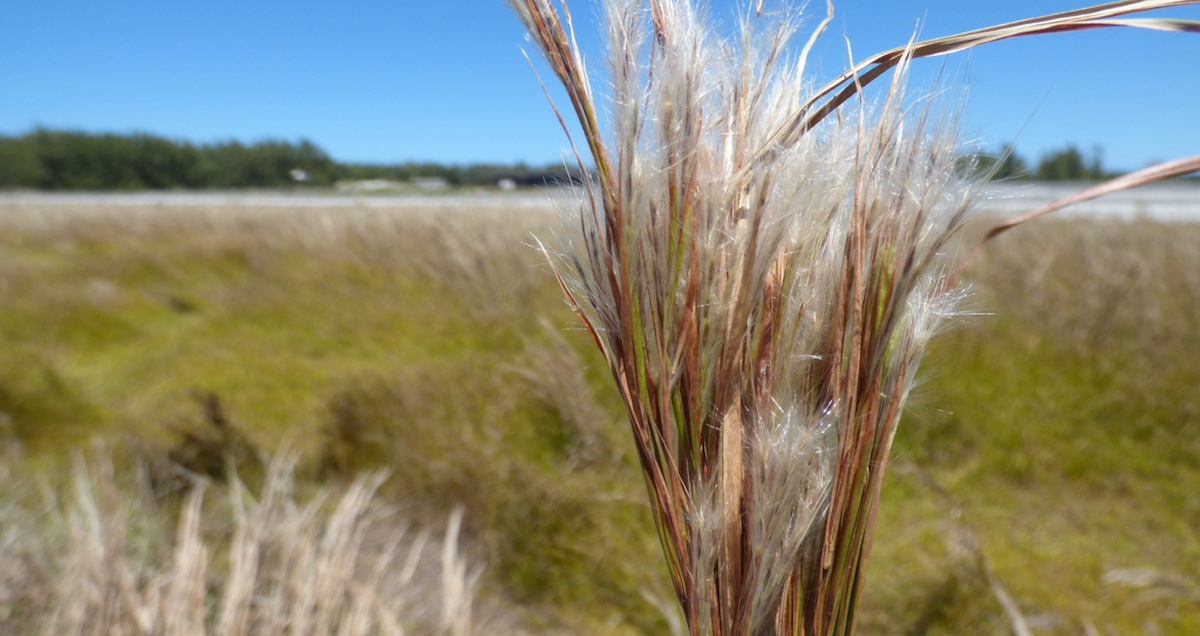
Bushy bluestem (Anatherum glomeratum) / iNaturalist
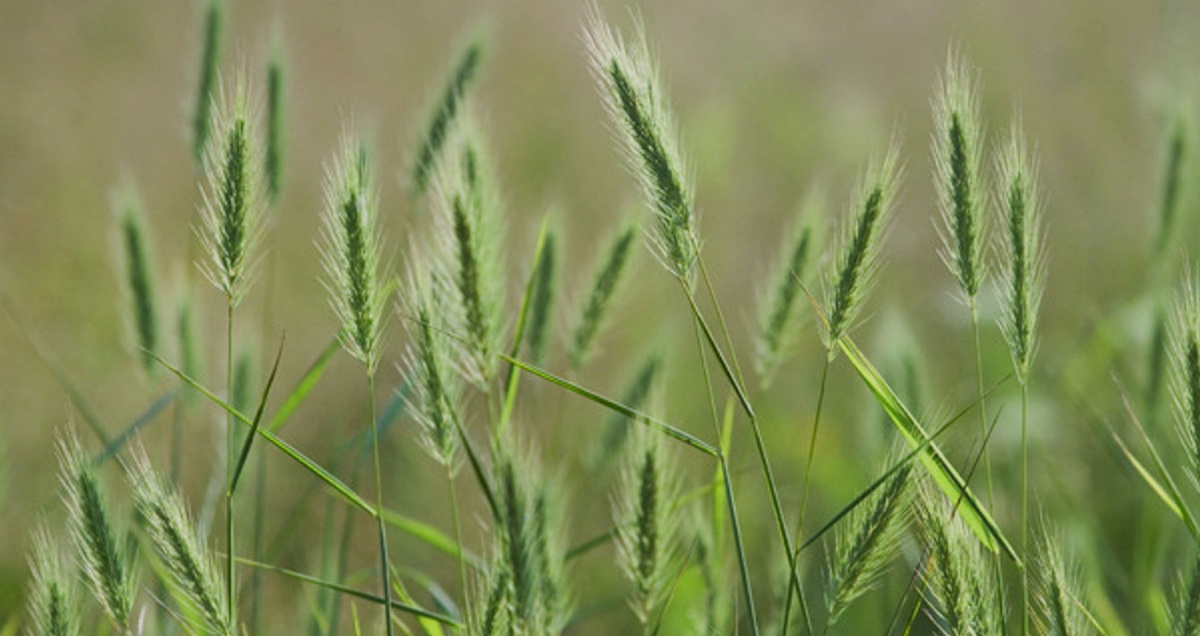
Wild rye (Elymus virginicus) / Missouri Prairie Foundation
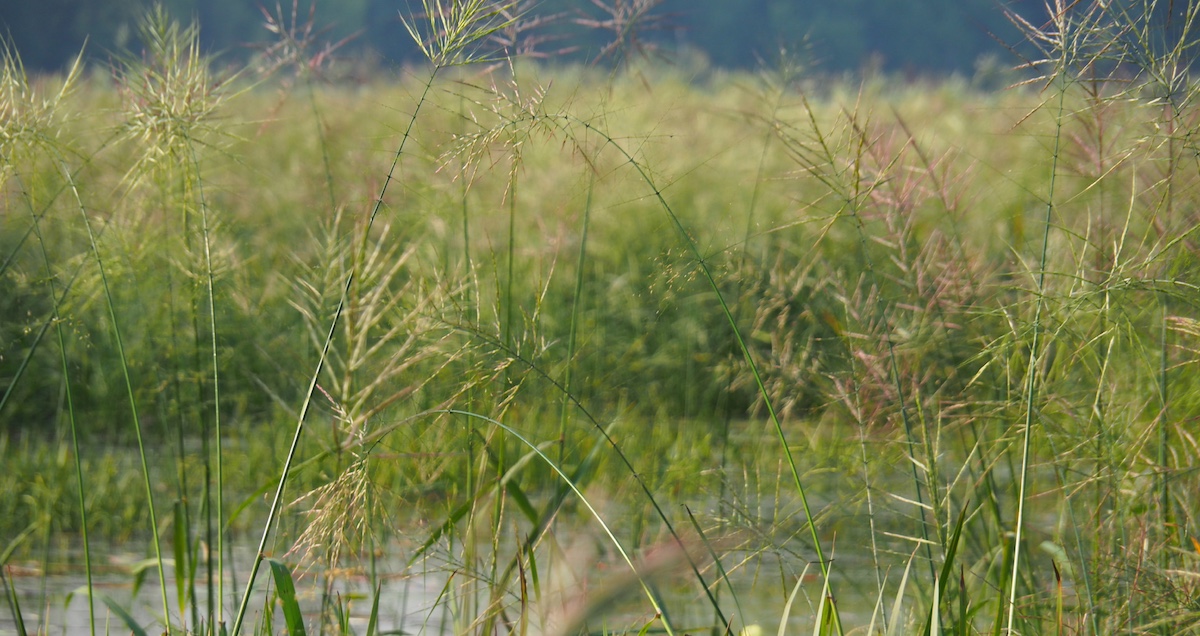
Wild rice (Zizania palustris) / iNaturalist
Landscapes of Little Ice Age scarcity
Besides the effects of overgrazing, a second set of conditions contributed to periodic scarcity in forage supplies in New England and the Middle Colonies: the long, often snowy, frigid winters of the Little Ice Age, and the recurring, devastating droughts that also defined this climatic period.
Take another look at the winter weather severity chart I featured in the first installment of this series, pictured below. You’ll see that in the two decades before Eliot began his agricultural experiments, colonists endured three very severe winters and one severe winter. During these winters, temperatures dipped well below freezing, and snowfalls came early and lingered, sometimes until May. When snow stayed on the ground for months on end, cattle, oxen, and horses could not graze outside. In these conditions—particularly if farmers lacked adequate hay stores for the winter—livestock could easily perish.
Now look at the chart above. In this second chart, “Drought conditions in New England and the Mid-Atlantic…” you’ll see that during the same 1740s period that Eliot began to concern himself with the task of expanding New England’s forage supplies, colonists in New England and the Mid-Atlantic experienced a decade of weather defined by drought. During that decade, particularly severe droughts in the spring and summer of 1746 and 1749 ruined hay crops.3
Alongside periodic droughts and severe winters, colonists also faced a third devastating condition that diminished their forage supplies in the 1740s as Eliot began writing his agricultural essays: the depredations of grass-eating worms. The map below chronicles and spatializes colonists’ experiences with these overlapping challenges. Explore the map to comprehend how the effects of droughts, cold winters, and worm depredations created a crisis in motion in the New England and Middle Colonies in two senses by the 1740s: the onset of a period of increased scarcity in forage supplies, and a situation whereby settlers’ livestock and draft animals lacked enough forage to move, reproduce, and work.
Agricultural adjustments in an organic economy
In the decades prior to the onset of the American and Industrial Revolutions, American colonists lived in an organic economy: a system in which virtually all energy production came from energy captured from water, plants, soils, and the sun.4 When the seasons and weather worked in colonists’ favor and when pests left colonists’ crops alone, colonists could accumulate the necessary energy to expand their wealth, grow their families, and enlarge their livestock herds. But when severe, inclement weather or pests diminished colonists’ crop yields, the biophysical limits bounding the amount of energy available in their respective organic economies quickly translated into hunger, livestock loss, and economic and social strain.
Several different types of plants aided farmers in these situations: forage crops that could grow in cooler temperatures, those that had larger leaves or special capacities to collect more sunlight or nutrients, and those that could achieve both of the latter feats. Eliot’s favored forage crop, Red clover (Trifolium pratense) had all of these traits.5
Click through the digital elements below to learn more about the plants taken up by farmers in England, Wales, and British America, as they adjusted to inclement Little Ice Age weather conditions and the inherent productive limits of each of these territories’ organic economies.
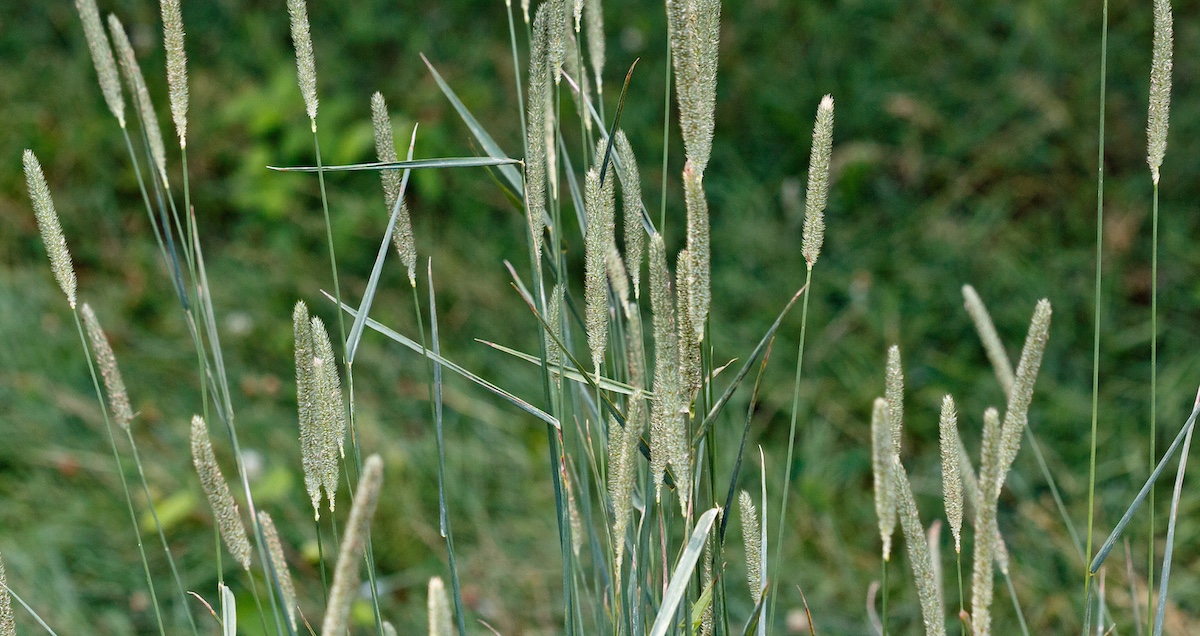
Timothy hay (Phleum pratense) / Tom Potterfield, Flickr, CC BY-NC-SA 2.0
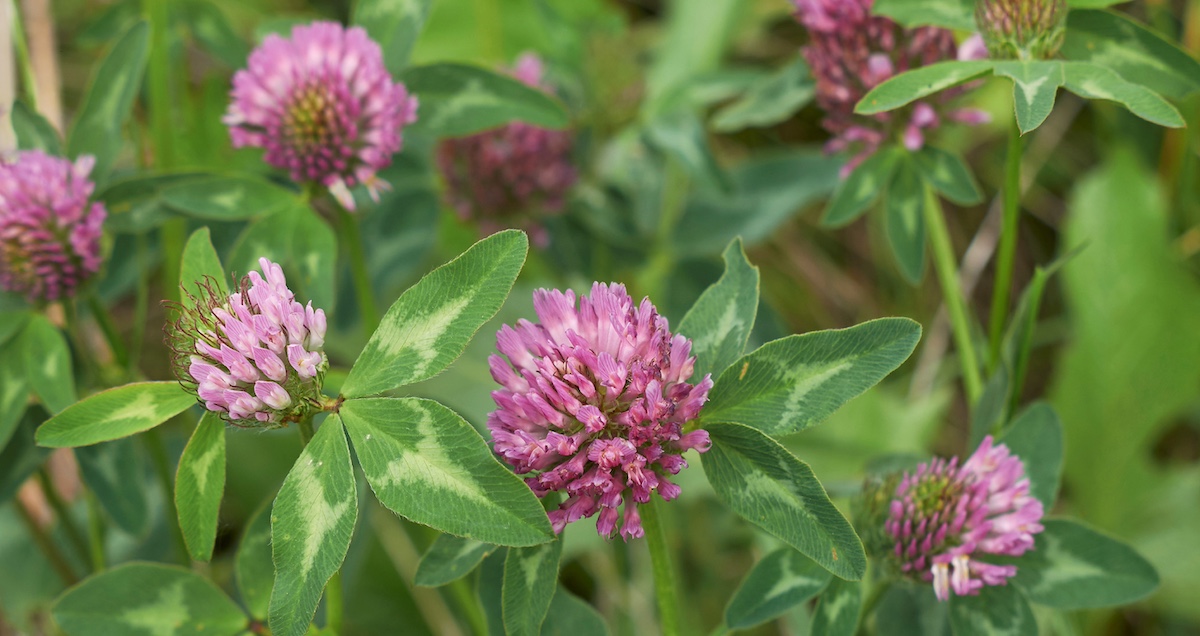
Red clover (Trifolium pratense) / Public Domain
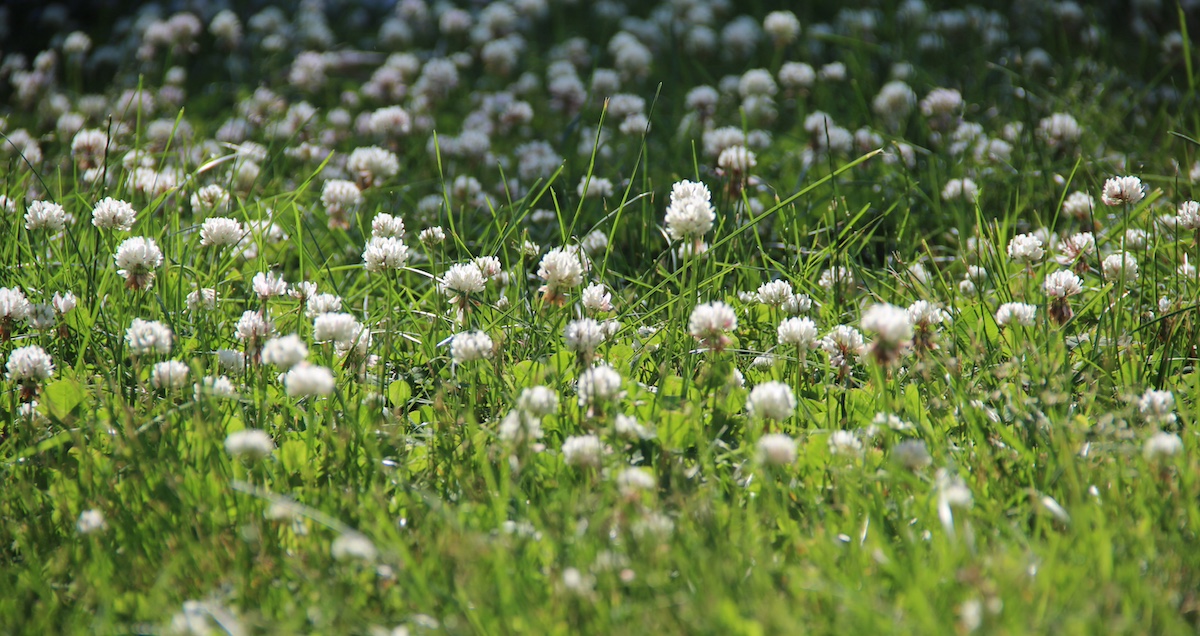
White clover (Trifolium repens) / NYS Integrated Pest Management, CC BY 2.0
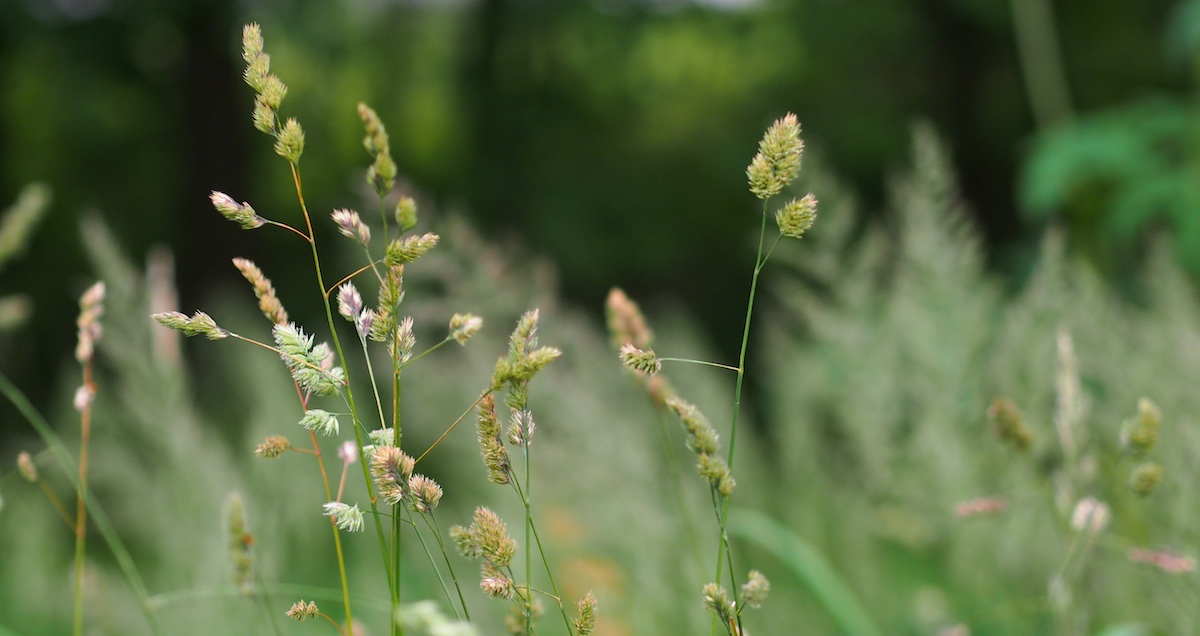
Orchard grass (Dactylis glomerata) / Public Domain
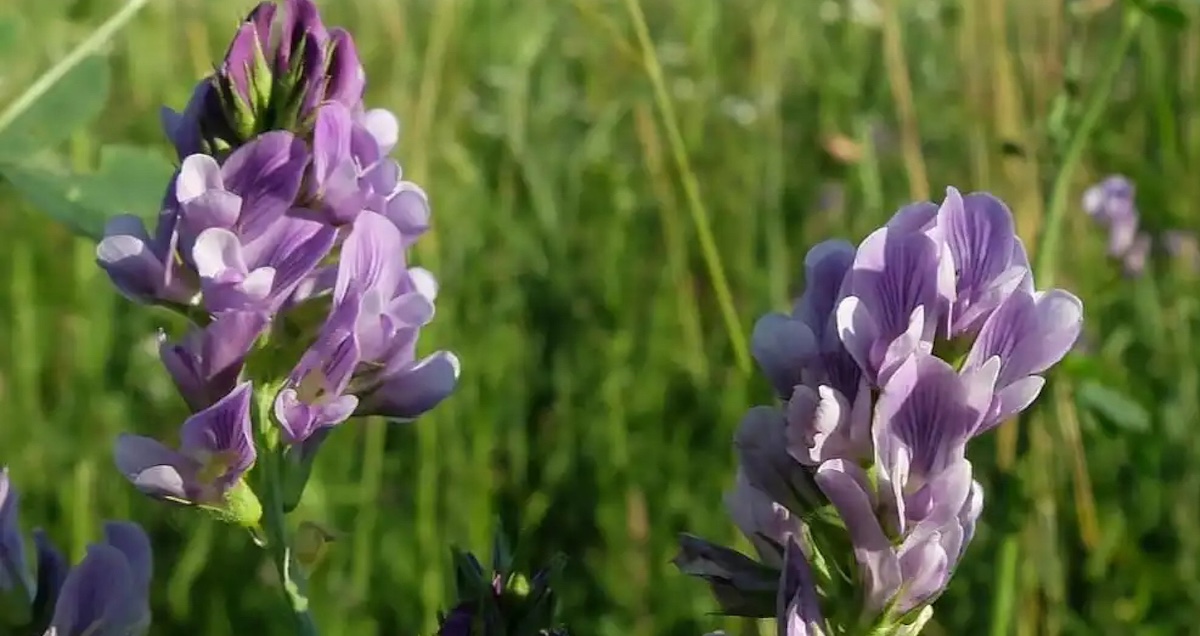
Alfalfa, or lucerne (Medicago sativa) / Public Domain
Landscapes of revolution
The American Revolution effectively resolved the crisis of energy scarcity in the colonies by doubling the land mass of the incipient United States with the 1783 Treaty of Paris—but not before Benjamin Franklin compared the colonies to a herd of milk cows, robbed of their grass supply. In 1770, three years after the British Parliament imposed import duties on the American colonies via the Townshend Acts, Franklin addressed a version of a memorable cow “Fable” to the “Secretary of State for the American Department”:
“A Herd of Cows had long afforded Plenty of Milk, Butter, and Cheese to an avaricious Farmer, who grudged them the Grass they subsisted on, and at length mowed it to make Money of the Hay, leaving them to shift for Food as they could, and yet still expected to milk them as before; but the Cows, offended with his Unreasonableness, resolved for the future to suckle one another."6
Franklin’s "Fable" suggested that the colonies were being denied their rightful independence to graze for hay as they pleased—and that’s exactly the sort of independence the colonists, in winning the War, achieved.
While the American Revolution was not fought explicitly and only for grass, the shortages in grass and meadow supply that preceded the American Revolution have yet to be written into the course of the events that preceded the momentous rebellion. Turn on Ken Burn’s 2025 documentary series The American Revolution, for example, and you’ll find historians noting the causal importance of land scarcity to the conflict, but not the causal importance of concurrent shortages in meadows and grass—a more specific form of scarcity that prevented farmers not just from accessing land, but from accumulating wealth from year to year. The series also makes no mention of the climatic and environmental conditions that periodically diminished farmers’ harvests. Current scholarly work on the period prior to the American Revolution largely mirrors these gaps.7
To understand the environmental context from which the United States was borne requires writing meadows and grass back into the story. Doing so helps to reveal how the country was founded upon not just upon the ideals of freedom from tyranny, justice, and equality, but also upon the ideals of abundance, expansion, and affluence.
In the 1740s, Jared Eliot argued for the opposite of expansion in his agricultural writings: he urged farmers to keep their farming tracts small and encouraged them to intensify production through new technologies—drill plows, clover, meadow drainage and the like. By the 1770s, delegates to the First and Second Continental Congresses began to more loudly call for an alternate solution to the colonies’ scarcity problem: a new republic built upon the logic of Native American dispossession and territorial expansion. The final installment in this series will examine several pivotal maps that showed the way toward this expansionary future.
As the United States turns 250 and as we grapple with the consequences of the country’s boundless energy footprint in the form of hotter summers and rising seas, Eliot’s agricultural projects and vision stand as reminders of a United States that could-have-been: A republic hemmed in on the coast, beholden to the limits of what the land there could provide.
Peering out across the Atlantic coast from an Amtrak train window on this Semiquincentennial, it’s a landscape vision that seems—some three centuries after American colonists’ hay shortages began to set in—unexpectedly current; even revolutionary.
Charlotte Leib is a doctoral candidate in the Department of History at Yale University. Trained in US and early American history, energy history, landscape history, and urban history, Charlotte writes and researches about the cultures, technologies, and political economies and climates that have shaped landscapes and cities in early America and in the nineteenth and twentieth century United States.
1. For a good overview of Eliot's agricultural writings, see: Christopher Grasso, “The Experimental Philosophy of Farming: Jared Eliot and the Cultivation of Connecticut.” The William and Mary Quarterly 50, no. 3 (1993): 502–28.
2. Pop-up graphic annotated with linework comes from: Andrew C. Kemp et al., “Relative sea-level change in Connecticut (USA) during the last 2200 yrs,” Earth and Planetary Science Letters 428 (2015): 217–229.
3. On these 1740s droughts, see for example: William R. Baron, “Eighteenth-Century New England Climate Variation and its Suggested Impact on Society,” Maine History 21, no. 4 (1982): 201–218 (205–208); Edward R. Cook, and Gordon C. Jacoby. “Potomac River Streamflow Since 1730 as Reconstructed by Tree Rings,” Journal of Climate and Applied Meteorology 22, no. 10 (1983): 1659–1672 (1669), Fig. 8.
4. British historical demographer E.A. Wrigley was the first scholar to bring the term “organic economy” into use. Environmental historian Paul Warde’s 2024 article on The Cambridge Group for the History of Population and Social Structure’s website, titled “Organic economy,” offers a succinct summary of the concept. For Wrigley’s early work on England’s organic economy, see: Wrigley, “The Supply of Raw Materials in the Industrial Revolution,” Economic History Review 15, no. 1 (1962): 1–16; Wrigley, Continuity, Chance and Change: The Character of the Industrial Revolution in England (Cambridge: Cambridge University Press, 1988). For his more updated synthesis of this earlier work, see: Wrigley, Energy and the English Industrial Revolution (Cambridge: Cambridge University Press, 2010).
5. See my forthcoming dissertation, “An Environmental and Energy History of the New Jersey Meadowlands” (Yale University, 2026) for more detailed sources and notes on the uptake, utility, and popularization of these forage crops in eighteenth-century colonial America.
6. For further context on Franklin’s cow “Fable,” see Verner W. Crane, “Three Fables by Benjamin Franklin,” New England Quarterly, IX (1936), 499–503.
7. The key exception to the norm in the existing literature is Joyce Chaplin’s book, The Franklin Stove: An Unintended American Revolution. In this important, pathbreaking book, Chaplin calls attention to the strains posed by Little Ice Age weather and coincident fuelwood shortages upon colonial life in the middle decades of the eighteenth century.
Our articles are always free
You’ll never hit a paywall or be asked to subscribe to read our free articles. No matter who you are, our articles are free to read—in class, at home, on the train, or wherever you like. In fact, you can even reuse them under a Creative Commons CC BY-ND 2.0 license.